
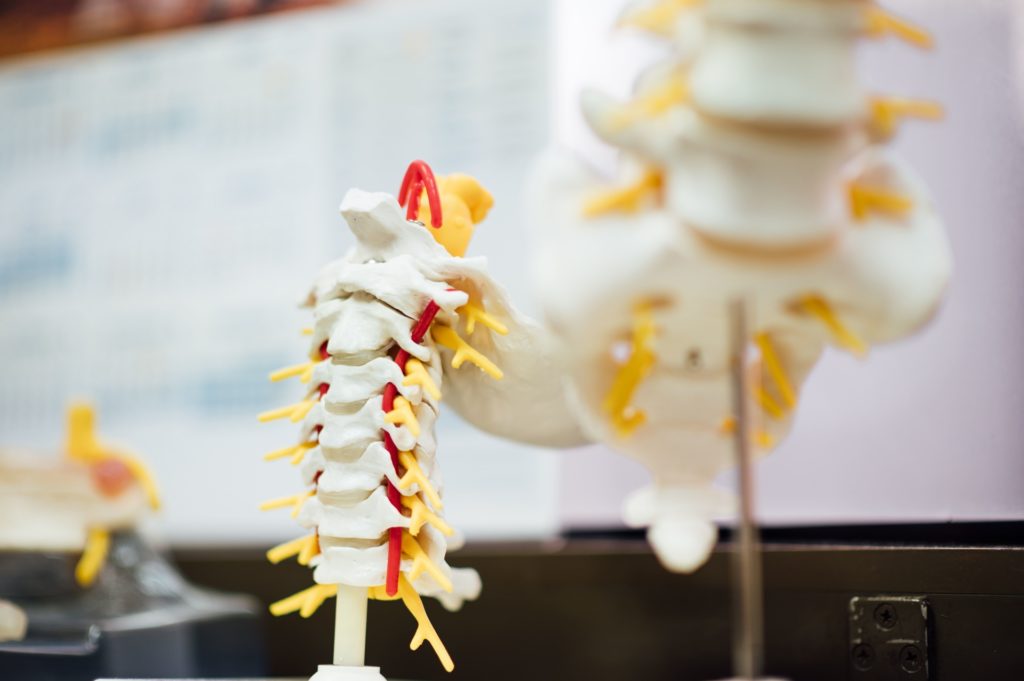
Do you know the areas of the spinal cord that are most commonly injured? Your cervical(neck) or lumbar spine(lower back) is most at risk for injury in a traumatic accident. The cervical spine supports head movement, while the lumbar spine bears body weight. Both areas face frequent strain due to mobility and load, making them more susceptible to injury than other spinal sections.
While your spine is strong, it can suffer injury or even permanent damage in an accident.
Incidents involving motor vehicle accidents, motorcycle accidents, slip and falls, etc., can result in catastrophic injuries.
One of these devastating injuries can lead to permanent damage to your spinal cord.
If you or someone you love sustained a spine injury due to another party’s negligence, speak with a New Mexico spine injury lawyer.
Contact us online today or call 575-404-7412 for a free consultation and see how we can help your case.
Understanding the Spine Regions Most at Risk for Injury
If you’re researching the areas of the spine that are most commonly injured, here’s what matters most about risk and recovery.
- The cervical (neck) and lumbar (lower back) regions are the most commonly injured areas of the spine due to their mobility and limited support.
- Spinal cord injuries are classified as complete, permanent loss of function, or incomplete, some retained mobility and feeling, depending on severity and location.
- National data shows less than 1% of spinal cord injury victims achieve a complete neurological recovery before hospital discharge.
- About 30% of people with spinal cord injuries require one or more additional hospitalizations within a year of their injury.
Which portions of the spine are the most vulnerable to injury?
The cervical and lumbar regions are the most vulnerable parts of the spine to injury. The cervical spine supports the head and allows for a wide range of motion, making it prone to whiplash and impact injuries. The lumbar spine bears most body weight and is susceptible to stress from lifting and twisting.
Spinal Cord Injury Levels
Your spine consists of several different levels—cervical, thoracic, lumbar, and sacral. Your spine has 33 bones, called vertebrae.
The lower nine vertebrae fuse together as you grow, which forms the sacrum and coccyx. Cartilage cushions each of the vertebrae that are stacked on top of each other.
The spinal canal, which is a hole at the rear of your vertebrae, houses the spinal cord. Severe accidents put your vertebrae at risk for damage, which can leave your spinal cord vulnerable.
The level of your spinal injury plays a role in how severe your injury is. Cervical spinal cord injuries are the most severe level of injury. The reason is that any injury to the cervical spine can affect the head and neck region, resulting in paralysis to all extremities.
A Spine Injury Changes Everything, We Understand
Whether it happened in a car accident, a fall, or another sudden event, a spine injury can turn your daily life upside down overnight. The pain, the uncertainty, and the changes to your independence are a lot to carry. We’re here to listen to your story and help you understand your options, with patience and without pressure.
Schedule A Free ConsultationWhat Are The Spinal Cord Injury Levels?
Spinal cord injuries consist of two main levels.
Complete Spinal Cord Injury
A complete spinal cord injury results in permanent damage to that particular area of the spinal cord.
Victims of a complete spinal cord injury will have paraplegia or tetraplegia (quadriplegia).
Incomplete Spinal Cord Injury
Someone with an incomplete spinal cord injury will have partial damage. The victim could have some mobility and feeling. However, the amount of mobility will depend on the area of the injured spine and the severity of the injury.
The National Spinal Cord Injury Statistical Center (NSCISC) reports the most common spine cord injury is incomplete tetraplegia, followed by complete paraplegia and complete tetraplegia.
Unfortunately, less than 1% of people experience a complete neurological recovery prior to hospital discharge.
The NSCISC report shows that 30% of people with spinal cord injuries need one or more future hospitalizations during any given year after sustaining damage to their spinal cord.
The most common reason victims need to return to the hospital is for genitourinary system diseases, followed by skin infections. Other common causes for hospitalization include circulatory, digestive, respiratory, and musculoskeletal disorders.
Between medical appointments, therapy, and adjusting to a new normal, it’s easy to feel overwhelmed after a serious spine injury. Let us help carry some of that weight. We’ll sit down with you, explain your legal options in plain language, and help you decide what feels right for you and your family, at no cost.
Schedule A Free ConsultationWhere is The Location of Your Spinal Cord Injury?
Four primary regions of the spine can suffer an injury. These areas are called the sacral spine, thoracic spine, lumbar spine, and cervical spine.
The severity of symptoms can be drastically different based on the region that suffers damage. Further, the two most easily injured portions of the spine are the lumbar and cervical spines.
What are the 4 Spine Injury Types?
- The sacral spine sits and the lower end of the spinal column. Damage here tends to affect the lower extremities. In most cases, sacral spine injuries are the least severe.
- The thoracic spine stretches down most of the upper and mid-back. Injuries to the thoracic spine can cause paraplegia and severe pain.
- The lumbar spine is in the lower back. Injuries to this area of the spine can significantly affect the lower extremities.
- Finally, the cervical spine is located primarily in the neck and upper back. Cervical spine injuries are often the most severe and can substantially affect the entire body below the neck
What are the Regions of the Spine Most Commonly Injured?
Injuries to the cervical spine, located in the neck region, are the most common due to its high mobility and sensitivity to sudden or forceful movements. However, injuries to the thoracic and lumbar regions can also result in severe and long-term disabilities.
Though the lumbar spine is protected by muscles and tissues in the lower back, it is prone to injury because it can be damaged through acute trauma, degenerative diseases, and everyday activities. The cervical spine is easily injured because it has relatively little protection.
Feeling weakness or pain in the lower back is often indicative of an injured lumbar spine. Arthritis and degenerative joint diseases commonly affect the lumbar spine region.
Playing sports and moving heavy objects are everyday activities that can easily lead to a strained lumbar spine. Further, people often injure their lower back during car accidents. All these factors make the lumbar spine the most commonly injured region of the spinal cord.
The cervical area is at the top of the spine and is the most prone to injury. There is little muscle and tissue to support the cervical spine in the neck area.
As a result, the cervical spine is susceptible to damage during whiplash events and when the head suffers a significant blow.
Ready For Your No-Charge Consultation?
Get in Touch with a New Mexico Personal Injury Lawyer Today
Pursuing a spinal cord injury claim is a complicated process. You need an experienced legal advocate on your side who can accurately calculate your claim value.
At Poulos & Cavazos, LLP, we work closely with licensed medical professionals who can help evaluate your case, locate suitable experts when necessary, and assist with preparing your case for trial.
Calculating your future expected medical costs along with your overall lifetime costs requires experience. Don’t risk your potential settlement by trying to negotiate your spinal cord injury claim alone.
Let our skilled team of New Mexico personal injury lawyers help. Contact Poulos & Cavazos, LLP, today to schedule an initial consultation. You can also give us a call at 575-404-7412.
Let us put our expertise to work for you and help you fight for the maximum compensation possible.
FAQs About Commonly Injured Areas of the Spine
Here are answers to common questions about the areas of the spine that are most commonly injured.
The cervical spine has little muscle and tissue support and allows a wide range of motion, making it prone to whiplash and impact injuries. The lumbar spine bears most of the body’s weight and is frequently strained by lifting, twisting, and everyday activity.
A complete spinal cord injury causes permanent loss of function below the injury site, resulting in paraplegia or tetraplegia. An incomplete injury allows for some retained mobility and feeling, with the extent depending on the injury’s location and severity.
Cervical spine injuries are generally the most severe because they can affect the head, neck, and entire body below the neck, potentially causing paralysis to all extremities. Sacral spine injuries, by contrast, tend to be the least severe.
According to national data, about 30% of people with spinal cord injuries require one or more additional hospitalizations within a year, most often for genitourinary issues or skin infections. Less than 1% achieve a complete neurological recovery before leaving the hospital.
Directions to Our Las Cruces Office

Victor Poulos, JD
For more than two decades, Victor Poulos has devoted his practice exclusively to representing patients and families harmed by medical negligence. He has handled complex medical malpractice cases involving hospitals, surgeons, anesthesiologists, and other healthcare providers, and has taken hundreds of depositions of physicians, nurses, and hospital staff across nearly every medical specialty. Mr. Poulos has successfully tried high-stakes malpractice cases to verdict and is known for his meticulous case preparation and relentless advocacy on behalf of injured patients.
